Aside

Floating across the Atlantic

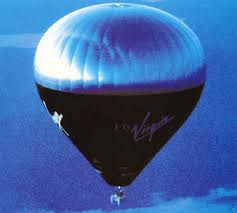
As I’ve said, Maine was very fertile ground for strange and unusual stories (and strange and unusual people, as well). But no story was stranger than when Richard Branson came to a Maine ski lodge to begin a transatlantic flight to Europe in a hot air balloon.  Branson’s balloon lifted off at a little after 4 in the morning and, even though the clipping indicates that this happened in July, I remember being pretty cold as we all huddled in the pre-dawn darkness on a mountain at the Sugarloaf Ski Resort in Carrabassett in 1987. We all thought the balloon may have been doomed when two large propane tanks clattered to the ground just as the balloon lifted off.  Branson’s adventure was successful, and this story (and others) appeared in newspapers across the country.


By ARTHUR FREDERICK

CARRABASSETT VALLEY, Maine (UPI) – The Virgin Atlantic Flyer, shoved along by the jet stream, soared past the old distance record for hot air balloons Thursday, just nine hours after lifting off from a Maine ski resort on a first-ever transatlantic trip to Europe.

The huge black-and-silver balloon carried its two British pilots, Richard Branson and Per Lindstrand, past the old record at around 27,000 feet, an altitude that allowed the balloon to take advantage of the jet stream while avoiding bad weather at lower altitudes.

A spokesman for the ground crew back in Maine said the balloon had been sailing along at 100 miles per hour or more since takeoff. The old distance record of 907 miles was surpassed in around nine hours, 18 hours less than the time necessary to set the old record.
ImageBut neither Branson nor Linstrand appeared too interested in the new distance record which they set just after 1 p.m., nine hours after the balloon left the ground at 4:15 a.m.

“There is a lot of ocean out there, the machine is complex, the weather forecasts are complex, and a lot of things can go wrong,” said Bob Rice, the project’s meteorologist. “They want to fly 3,000 miles, so 900 miles doesn’t mean that much.”

Branson told the ground crew by radio the flight was going smoothly, but said he was frightened at one point when he spotted a vapor trail near the capsule.

“When we arrived at 27,000 feet we hit very cold weather,” Branson said. “There was an enormous cloud behind us that created a massive vapor trail, and for a moment I thought the balloon was on fire.”

It wasn’t the only frightening moment for the two balloonists. As the giant silver-and-black balloon lifted off , two of the 12 large propane fuel tanks surrounding the pressurized capsule fell off and a cluster of sandbags failed to let go as planned.

Continue reading

Journalism as history II — the Phoenicians in Maine

Earlier I posted a story I wrote about some ancient amphoras (jugs) that were found by divers on the sea floor off Maine. That story included some expert opinions that the amphoras came from ancient Phoenicians who had visited the Maine coast before the birth of Christ. Now, my rummaging around in my old files has turned up a second story I wrote in 1976 that claimed the stone etchings on Monhegan Island (and perhaps elsewhere) also had connections to the Phoenicians. I don’t recall the origins of either of these stories, so I don’t know if they came from the same source. But both of the stories were well played in newspapers around the country.

By ARTHUR FREDERICK

MONHEGAN ISLAND, Maine (UPI) – A few crude rock carvings on this craggy coastal island could force historians to take another look at who discovered America and where the American Indians came from.

The carvings, known as the Monhegan Inscription, have been studied since 1855. But they and other carvings in New England have taken on new meaning to archeologists and linguists in the past few years. And they may indicate that the New England coast was a busy trade center for Phoenician sailors as long ago as 200 B.C.

For many years the inscriptions along with inscriptions in Bourne, Mass. and elsewhere in the region have been thought to be the work of Norse sailors. The theory was that the Norsemen discovered America several hundred years before Columbus.

But now some archeologists, including James P. Whittall, director of archeology for the Early Sites Research Society in Boston, feel the inscription is written in Ogam script used by the Celts in the Iberian peninsula as long ago as 2000 B.C.

Whittall said the inscription was translated by Dr. Barry Fell, president of Boston’s Epigraphic Society, to read “Long ships of Phoenicia: cargo lots landing quay.” If the translation is correct, it could have been a message to Phoenicians who may have landed at Monhegan long before the birth of Christ to deal in fish, furs and minerals.

“When these inscriptions were found along the New England coast, some tried to apply them to the Norsemen because some of the symbols are the same,” Whittall said. “They forced the symbols into a Norse translation, so scholars ended up calling them a fraud.”

“They never studied Iberian script, because it then was very little known and not translated,” he said. “One of the problems with the Norse is there is a close similarity between Iberian and Norse runic script, and we feel runic script was developed out of Iberian script.”

Continue reading

Nick Apollonio’s guitars

I don’t remember writing this story in 1974. I don’t remember meeting Nick Apollonio, and I don’t know if I went down to Camden to interview him or if I simply talked to him on the telephone.  But I did look him up via Google and it seems that he’s still in the Camden area and still making guitars that musicians value very highly. He was 27 when I wrote this story, and that would make him 67 now – my age. As I’ve noted elsewhere on this blog, Maine was an absolute treasure trove of interesting people doing great things. Kind of a writer’s paradise.

Camden man is specialist in guitars

CAMDEN, Maine (UPI) – The guitars that Nick Apollonio makes are fashioned out of redwood or cedar on the second floor of a barn that overlooks the rocky coast.

The six and 12-string instruments have been coming out of Apollonio’s shop, one at a time, since 1968. He says they are about the best that can be found anywhere.

“I specialize in 12-strings, because I found I could make a good tone,” he said. But Apollonio also makes six-string guitars, dulcimers, and he recently completed his first fiddle.

“I did a fiddle last February, and that was great,” he said. “I used a redwood top with a walnut body, and it sounds excellent.” Violins are usually made out of maple, with spruce tops.

Apollonio is 27, and the guitar shop, which he calls The Works, got underway in 1968, right after he got out of college.

“I got into it slowly,” he said. “When I was a teenager, I learned to play the electric guitar and later on developed an interest in folk music, to the point where I wanted my own guitar.

“A friend of mine, Gordon Bok, had two excellent guitars, one of which he had made, and he convinced me that I should try to make one,” he said. “It was so simple that I thought it was worth a try.”

The first two or three guitars came out sounding pretty good.

“Somebody gave me an order, and a little later on I just went ahead and opened the shop. I sold about 12 instruments that first summer,” he said.

One of Apollonio’s instruments was made for Paul Stookey, formerly with the Peter Paul and Mary group.

The guitars can be made to produce different tones and the finish can be simple or elaborate. The instruments cost anywhere from $100 to $700.

“The difference is tone, playability and the detail that goes into it,” he said.

Most of the orders have resulted from word of mouth and most come from the New England area, although Apollonio has received orders from as far away as California and Louisiana.

Apollonio says he wants to get into making stringed instruments which are played in the Balkans.

“The Ukranians and the Greeks use all kinds of little stringed instruments for their dances, and I’m curious about them,” he said.


Animal stories/Rockport Harbor II

While Andre the Seal held the title of most-written-about animal in Rockport Harbor, there were other animal stories that occasionally originated in that seacoast town. This story was about a baby sperm whale that floated into the harbor, and the efforts to keep it alive. I don’t recall the outcome of this story, whether the baby whale lived or died.

By ARTHUR FREDERICK

ROCKPORT, Maine (UPI) – They built a sling out of beams and fish nets, and gently eased the newborn sperm whale over it in the shallow water near the shore at Rockport Harbor.

Straps that usually hoist boats from the water were drawn up and the baby whale, weak from hunger and close to death, was moved onto a dock and into the back of a large red and white van for the ride down the turnpike to Boston.

The little whale had floated into the harbor early Monday. At first it swam in lazy circles. Then it floated up and rested on the sand near shore.

People waded out and tried to push the whale back into deep water, but it kept turning about and moving back near the shore. Hundreds of people lined the beach and watched the whale as it lay in the shallow water.

Biology students from the College of the Atlantic in Bar Harbor came to Rockport and helped experts from the New England Aquarium in Boston check over the whale. At first it was thought eh animal was about a year old, but Dr. Joseph Geraci, a veterinarian at the New England Aquarium, and aquarium director John Prescott said the whale was a baby which had been separated from or rejected by its mother,,

They said the baby whale hadn’t been fed in some time. They said it was dehydrated and had lost as much as a third of its weight, which at birth is about 3,000 pounds.

A private plane was sent aloft to search the coast for the mother. If she had been found, the baby would have been towed out to meet her. But she wasn’t found, and Prescott and Dr. Geraci began making plans to move the whale to the New York Aquarium.

The examination early Tuesday, however, indicated the whale wouldn’t survive the trip. It was decided to take it to the aquarium in Boston.

Harry Goodridge, the local harbormaster, had been with the whale since it first came into the harbor.

“They gave him massive doses of antibiotics,” Goodridge said. “There is a lot of interest in him because he’s the first live sperm whale anyone’s ever had.”

Louis Garibaldi, the New England Aquarium’s curator, cautioned that chances of saving the little whale were slim.

“The animal is in very poor condition,” he said. “It is a recent newborn, it’s very thin and it’s had little nutrition.”

“The prognosis is poor, and it appears the whale may die no matter what we do.”

Animal stories: Andre the Seal

There are some stories that get written once a year, over and over again. In Maine, the king of all once-a-year stories was Andre the Seal. Maine reporters cringed every year when Andre, a harbor seal that had been abandoned as a baby by his mother, would return to Rockport Harbor. I must have written this story at least a half-dozen times. This was the 1976 version.

Andre returns to Maine 

By ARTHUR FREDERICK

ROCKPORT, Maine (UPI) – When the sky lightened over a foggy Rockport Harbor Monday, Andre was there.

Andre, a fat 16-year-old harbor seal, had spent most of the past two weeks lounging in a series of rowboats from Port Clyde to Cape Rosier. His trainer, Harry Goodridge, Rockport’s harbormaster, was beginning to think that Andre had decided to stay free.

ImageGoodridge found Andre when he was a small pup, not long after the seal had been abandoned by his mother. Goodridge kept the little seal in his bathtub for a while, and later built him a pen in the harbor.

Andre learned tricks, and the seal and his trainer have been entertaining visitors to Rockport since the early 1960s.

In the winter, Andre would swim south, and spent some time in the harbor in Marblehead, Mass. But the past three years Goodridge has taken Andrew to the New England Aquarium in Boston for the winter.

In the spring, Andre has been taken to Marblehead and set free. A few days later, he shows up in Rockport.

Andre usually makes the swim in three or four days. But this year was different.

Andre visited some people along the coast and played games with boaters before arriving in Port Clyde, a few miles south of Rockport. He climbed into a rowboat, moored 200 feet offshore, and went to sleep.

Andre stayed in the boat for two days, sleeping and sunning himself. A local resident said the seal would occasionally scoop up a flipperful of water from the bottom of the boat and lazily splash himself. His next visit was at Deer Isle, about 20 miles east of Rockport. He spent some time in a rowboat there, and then was spotted in a boat in Cape Rozier.

But two boys were at Goodridge’s house early Monday.

“They told me he was back,” Goodridge said. “I went down to the harbor and and he was there heckling a lobsterman.”

“When he saw me, he jumped riight into  his cage.”

Goodridge said Andre looked good, and said he had lost some of the weight he had gained over the winter at the aquarium.

“He was just enjoying his vacation, I guess,” Goodridge said. “I began to get a little worried when he didn’t come home, but I kept thinking that he was free for years, and that he always came back.”

When Andre spent his winters free, he would sometimes take off for extended periods.

“He was gone for more than three months once,” Goodridge said. “Probably went to the North Pole.”

While Goodridge and his wife worry about Andre when he’s gone, they both have hoped that the seal would one day leave Rockport Harbor and learn to live on his own.

“We’ve always hoped he would go wild,” Mrs. Goodridge said. “We hate to keep him cooped up all year.”

“But if he comes back, There’s a place for him, and plenty of fish.”


Feature writing: Hockey at Frog Forum

I think that the very best feature stories are simple ones. I loved this story about a homemade skating rink, and how it bonded two generations of a family. For years I thought this story had been lost, and I was delighted to find it in one of my clip files.

Frog Forum’s last hockey game

By ARTHUR FREDERICK

WATERVILLE, Maine (UPI) – Kyle Frewin welcomed the new year just as he has every year since he was a kid – playing hockey all night with the neighborhood kids on the home-made rink behind his parents’ house.

This could be the final year for the rink, named Frog Forum so many years ago that no one quite remembers why. The New Year’s hockey game that extended well into Tuesday morning could be the last.

Kyle, 21, the youngest of four Frewin sons, will graduate in the spring from Gordon College in Massachusetts. His father, Ron, lost his job months ago and wants to sell the house and move to Arizona. If that happens, there will be no more Frog Forum.

Frog Forum began humbly, a modest backyard rink banged together out of three-foot boards in 1961 by Ron, who wanted to share his love for hockey with his boys.

Over the years, the rink behind the Frewin’s house grew larger.

First, it claimed a few trees and shrubs. Then the Frewins made more room by ripping up part of the driveway. Eventually, even Louise Frewin’s clothesline was ripped down to make room for more ice.

The Frewin boys grew bigger, and so did the neighborhood kids who skated at Frog Forum. Hockey pucks flew over the boards and into the neighbors’ yards. The youngsters played past sundown, groping for the puck in the darkness.

Ron installed six-foot boards to keep the puck on the ice. He installed lights so the kids could play all night if they wanted to.

Down the street, a  group of youngsters formed a hockey team called the Scummies. Ron turned on the lights, and Frewins and Scummies banged each other happily into the boards.

“We’ve had broken teeth, pucks that have split eyes and heads, injuries from when the kids got banged into the boards,” Louise Frewin said. “They all watch television, and they all have to play as rough as the Bruins.”

This year, with Kyle in school and Ron suffering from arthritis, Frog Forum almost stayed stacked up in the garage. But Kyle wanted one more New Year’s.

“Kyle begged us to put it up once more,” Louise said.  ”And Ron said to me, ‘How can the neighborhood kids ever learn to play hockey if they don’t have Frog Forum?’”

The Frewins went to church New Year’s Eve and afterwards, at around midnight, Kyle and a dozen neighborhood kids laced up their skates and started to shoot the puck around the ice.

“I went to bed, but I could hear that puck banging into the boards all night long,” Louise said.

The oldest Frewin son, Donn, died in a swimming accident eight years ago. Paul is a doctor in Louisville, Ky. Wesley is an electrical engineer in Connecticut.

With everyone gone, Frog Forum seems doomed. But Louise thinks Kyle might have other plans.

NOTE: This story ends rather abruptly and I think the newspaper editors may have trimmed it to fit an available space in the page. If I ever find a complete version of it, I’ll add the missing paragraphs.

UPDATE 1/20/2015: I came across another version of this story quite by accident and, sure enough, there was one additional paragraph in the original version, which makes the story end a bit less abruptly.  Here it is:

“What he wants to do is become a history teacher right here in Waterville,” she said. “And he wants us to leave him the boards when we move to Arizona.”

Politics and divorce

I had forgotten about this story, but I found it deep in my clips file. I remember being assigned this story and not really wanting to do it. I didn’t like the idea of calling up these politicians and asking them to talk about their divorces. Sure enough, none of them wanted to talk. I do remember that this story got pretty good play around the country — this clip came from the Tampa Tribune. 

Divorce no bar in Maine politics

By ARTHUR FREDERICK
AUGUSTA, Maine (UPI) — Top-level politics is no family matter in Maine, where the state’s two U.S. senators recently filed for divorce and the last two governors are among the ranks of the formerly married.

At a time when the public has focused on Gary Hart’s marital situation, the old adage that one must be stably married to succeed in politics has been thrown out the window in the Pine Tree State.

Gov. John McKernan has been divorced since 1978.  Democratic Rep. Joseph Brennan, who swapped jobs in January with former GOP congressman McKernan, was divorced in 1976. And when GOP Sen. William S. Cohen and Democratic Sen. George Mitchell announced within the past six months they were seeking divorces after marriages of 25 and 28 years, respectively, it raised more eyebrows in Washington than in Bangor or Portland.

Rep. Olympia Snowe, R-Maine, the state’s other member of Congress, has been a widow since 1973. She and McKernan are good friends and say they have dated.

“The people in Maine think nothing of it,” said James Russell Wiggins, former editor of the Washington Post, who moved to coastal Maine in 1969 to publish the weekly Ellsworth American newspaper. “I don’t think anybody ever raised divorce as an issue with Brennan’s election or McKernan’s, and you don’t hear about it with Cohen or Mitchell, either.”

Some political analysts say the state may have so many divorced politicians because Maine voters stress Yankee independence over conventional morals.

Continue reading

Another people story from Maine

Stories about unusual characters doing unusual things in backwoods Maine was a formula that got stories into newspapers across the country.

Psychologist is happier as a boat builder

By ARTHUR FREDERICK

GEORGETOWN, Maine (UPI) – Sam Francis respects things made of wood.

He carved his boatyard out of the wood from the banks of the Back River, and he works on boats crafted from wood.

Francis restores pleasure vessels, many of them built in the first half of this century and each one becoming rarer with the passing years.

The work is primarily a hobby that provides a few dollars, and Francis wants to keep it that way.

“The boatyard doesn’t really have a name,” Francis said. “We’ve been calling it the Back River Boat Works, but sometimes it gets called the Back Yard Boat Works.”

Francis, 32, came to Maine three years ago via Massachusetts and Connecticut. He was trained as a psychologist. He was a psychologist in the service and a housebuilder in Massachusetts before coming north.

“It really started as a hobby,” he said. “My wife and I have been interested in boats for a long time, and I’ve done repair work here and there.

“At one point we bought a 40-foot ketch. It needed a lot of work and we re-built it. It needed sails and we learned sail making. We had to learn how to because we couldn’t afford to have someone else do it.”

That boat gave way to a 60-foot schooner, and Francis did the same with her.

“We sailed as much as we could, and I became sort of an itinerant boat worker,” he said. “We just sort of backed into it.”

The move to Maine first involved plans for self-sufficiency. But scratching a living from the earth in northern New England isn’t easy, with its long winters and short growing season.

“We originally came with an interest in homesteading,” he said. “We do grow most of our own food, and we have a greenhouse, we heat with wood, and we’re semi self-sufficient.”

“The boat works provides the cash flow. We’re doing alright, but from a purely business standpoint it’s hard to say. If we make money, we put it back into the shop.”

“I try to stay away from the hard business aspects of it. Mostly I don’t look at it as a business at all.”

Sitting in the yard now is a beautiful 67-foot yacht named “Hutoka.” Francis said she was built in 1904 and won the Bermuda race in the 1920s. The present owner, a Bath family, is having the boat completely re-fitted.

“When we’re done, possibly in the spring, we’ll have just about rebuilt her.”

Journalism as history

Stories like this were always hard for me to resist — some bit of offbeat or unexpected history discovered in our backyard.  Perhaps something dug out of the ground, or tidbits discovered in some museum archive. In this case, it was an expert trying to interpret something that had been found on the ocean floor. Phoenicians off the coast of Maine  in 500 BC? Well, it COULD have happened. And if someone with credentials said it was possible, it was worth writing about. This Maine story got in papers around the country, including the Boston Sunday GLOBE.

Ancient  jugs found off Maine coast


By ARTHUR FREDERICK

CASTINE, Maine (UPI) – The two jugs are white, or off-white, and had rested on the ocean floor not far from Castine for many years before a diver found them a few years ago.

How long did they lie submerged? Scientists have theories that run from around the time of the American Revolution back to hundreds of years before Christ.

Warships weren’t uncommon in Maine waters during the Revolution 200 years ago. Several American ships were scuttled not far from where the jugs were found. They could have been thrown overboard by a sailor. Or, they could have been moved by currents from the nearby wreckage of the sunken ships.

But Dr. Barry Fell has another theory.

Fell is head of the Department of Comparative Zoology at Harvard University, and a master of ancient languages. He believes the jugs could have come from Phoenician sailing vessels, which he thinks may have visited the coast of Maine centuries before Christ lived.

In a recent book, Fell contends that parts of North America were settled by Celts from Portugal perhaps 500 years before Christ.  He based his theory on the discovery of inscriptions found in dank stone caves that dot portions of New England.

The inscriptions, he said, are Ogam, a form of writing invented by Phoenicians and adopted by Celts from Iberia and North Africa.

“I first heard about it (the jugs) when two members of the Maine Archeological Society told me divers had found amphoras, which were containers used for oil and wine,” Fell said.

Fell was most excited to learn the containers were found near where he had predicted Phoenician artifacts might be discovered.

Fell had interpreted rock carvings on nearby Monhegan Island to read “Long ships of Phoenicia; cargo lots landing-quay.” He said the inscriptions could mean Phoenician sailors had traded along the coast hundreds of years ago.

Besides the containers and the Monhegan Island rock inscriptions, there are other possible signs that Phoenicians came to the region.

It has been rumored for several months that the remains of several ancient ships were found off the cast near Kittery by divers searching for the wreckage of Revolutionary War ships. John Hallett, director of the Kittery Museum, confirmed wreckage had been found, but declined to pinpoint the location.

Fell said Hallett “visited me, and asked if I had ideas that Phoenicians may have visited North America because his divers had seen what seemed to be hulls of ancient ship son the ocean floor.”

“What we have,” fell said, is this very tantalizing report, and we don’t know whether it’s true or not.”

Political writing: Shadowing the candidates II

It was standard practice to cover top-of-the-ticket political campaigns in part by spending some time on the campaign trail with the candidate. In 1976 in Maine, the U.S. Senate race was between incumbent Senator Edmund S. Muskie and Republican challenger Robert A.G. Monks. I spent a day with each of the candidates and turned out these stories. Looking back, I’m not sure how much such stories added to the quality of the campaigns. But it was Standard Operating Procedure, so that’s what we did.

 EDITOR’S NOTE: Robert A.G. Monks thinks he can beat Sen, Edmund S. Muskie, D-Maine, this November because of voters’ disenchantment with the Washington establishment. UPI recently spent a day with both Monks and Muskie. Monks campaign style is examined in this, the second part of two parts.

Monks campaigns shaking hands in many places

By ARTHUR FREDERICK

FREEPORT, Maine (UPI) – Robert A.G. Monks started his day as he has started many others during his campaign against Sen. Edmund S. Muskie; he shook hands with people at their place of employment.

This time it was at L.L. Bean’s in Freeport. The handshaking took up most of the morning, and he stopped off at a lunch program for the elderly and at the local police and fire stations before he took a rare lunch break to talk about his campaign.

Monks is getting around in the same wine-red International Scout he used during the primary, and he’s still usually accompanied by John Miller, who was a graduate student at the University of Maine at Orono before getting involved in Monks’ campaign last April.

The Scout looks the same except for an antenna sprouting from the roof.

“It’s a telephone,” Miller said. “We just put it in. It’s the only way we can keep in touch with the office.”

Monks’ campaign style has some definite patterns. He likes mill gates, country stores, programs for the elderly and fire stations. He claims to have campaigned at more than 70 mill gates and more than 40 programs for the elderly, and he usually stops to talk to the firemen whenever he can.

There was only one fireman on duty at the Freeport Fire Station when Monks arrived, a man perhaps a little taller than Monks, who is six-foot-six-inches.

“You,” Monks told the man, “may be the first person I’ve met during the campaign I can look in the eye.”

Continue reading