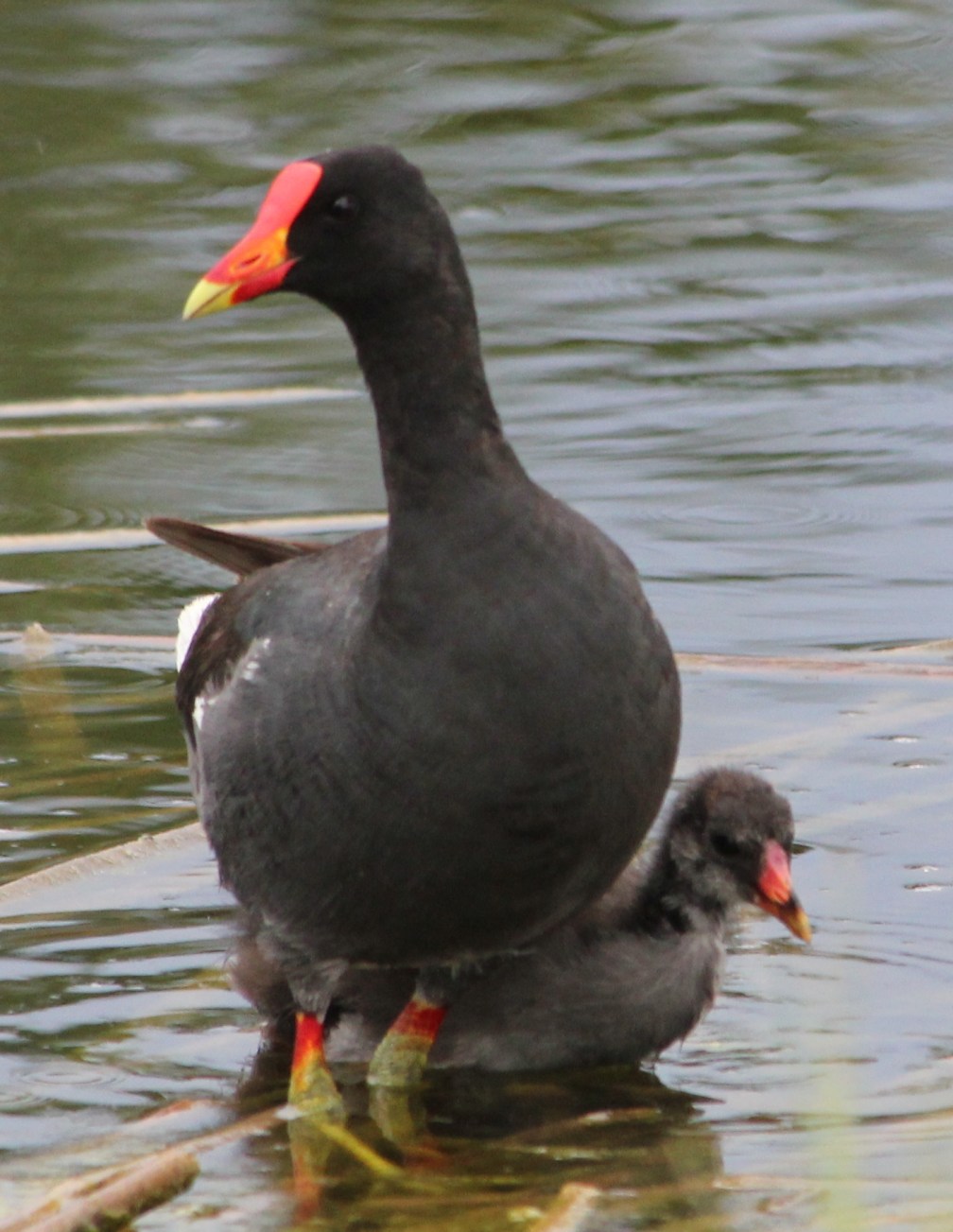
Like I said, I take a lot of bird pictures. This is a Common Moorhen with a baby.
Like I said, I take a lot of bird pictures. This is a Common Moorhen with a baby.
This is the only obit I ever wrote that made me cry. There was something about this young woman’s early death, and the things that she accomplished in such a short time, that got to me. People always say nice things about the dead, but the comments I heard about this person were different, very sincere and meaningful. Also, the flight suit hanging in her closet, awaiting her death, was a powerful metaphor for me.
Illness had kept Elizabeth “Beth” Rogers from her job as a Bayfront Medical Center flight nurse since last fall, but the helicopter crews would fly over her home whenever they got the chance to let her know they were thinking of her.
Mrs. Rogers lost her long battle with cancer Wednesday at Mease Hospital Dunedin. She was 25.
“She could always hear the helicopter before the rest of us,” her husband, Ted Rogers, said Thursday. “She would say, `Here they come.’ It always brought her pleasure to hear them going over.”
Although illness forced an end to her career before her 25th birthday, Mrs. Rogers had accomplished a great deal, according to her co-workers. She was a trained paramedic, a registered nurse and a certified flight nurse, and worked on the BayFlight crews for more than a year.
“Beth had geared her whole life toward becoming a flight nurse,” said Maurice Brazil, BayFlight’s chief flight nurse. “She was the only nurse I know who had every certification known, and at her age that was extremely unusual. She was very energetic and very focused on patient care.”
Brazil said the Florida Flight Nurses Association, meeting recently at a national emergency care conference in Orlando, voted to name its new annual award the Beth Rogers Award and to make her its first recipient. In addition, he said, the Florida Emergency Nurses Association has established a scholarship in her name.
“Some of us old dogs have been in this business for 20 years, and Beth had been flying for only two or three years,” Brazil said. “That’s the kind of impact she had. Our whole industry is just devastated.”
Mrs. Rogers knew she wanted to be involved in emergency medicine when she was in her teens, her husband said. Her interest in flight nursing happened later.
“Beth was always interested in emergency medicine,” he said. “In 1985, she became involved with the Young Explorers, which allowed young people to participate in various fields. She worked as a volunteer in the emergency room in a hospital in Panama City.”
Mrs. Rogers earned her EMT license in a program in Panama City, Fla., taught by her future husband, and then began working in Walton County. Later, he said, she returned to school and earned registered nurse and paramedic licenses.
“In 1991, we went on vacation and rode in a sightseeing helicopter, and then she did an internship with Life Flight Helicopters in Tallahassee,” Rogers said. “She thought it was the best of both worlds, doing the work of both a paramedic and a nurse. She always wanted to do both.”
Mrs. Rogers went through several surgeries and underwent long radiation and chemotherapy sessions in her battle with cancer, her husband said. Through it all, she expected to recover and to return to work.
“She always treated it as another challenge; she never gave in to it,” her husband said. “She wanted very much to be able to go back to work. She had a brand-new flight suit hanging in her closet that she had never worn, and she had every intention of wearing it some day.”
Rogers said his wife will be buried in the new flight suit.
Mrs. Rogers was born in Nashville, Tenn., and came here in 1991 from Panama City, Fla.
In addition to her husband, she is survived by her parents, Roger and Laura Draffin, Palm Harbor, and a brother, Wally A. Draffin, Auburndale.
Sylvan Abbey Memorial Park is in charge of arrangements. Visitation is planned from 6 to 8 p.m. today at Moss-Feaster Sylvan Abbey Chapel, Sunset Point Road, Clearwater. The funeral service will be 10 a.m. Saturday at Curlew Baptist Church, 2276 Curlew Road, Palm Harbor. Burial will be in Sylvan Abbey Memorial Park, Clearwater. The family suggested donations to the American Cancer Society.
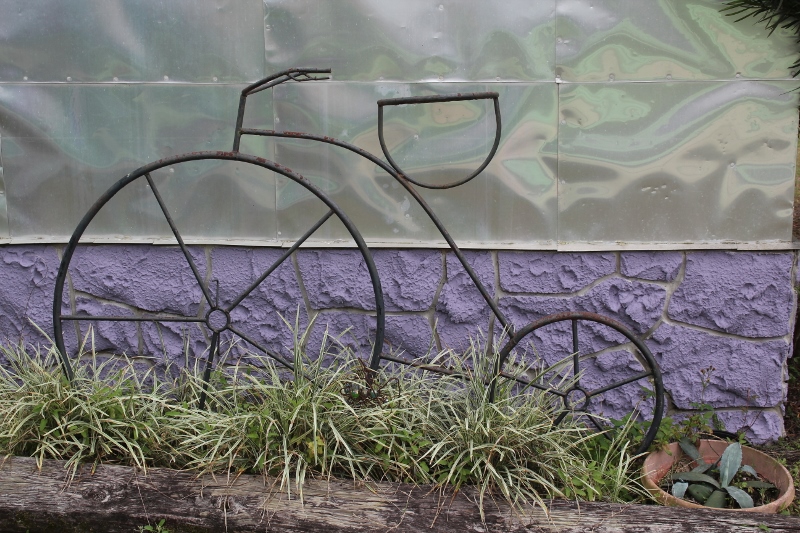


A friend of mine owns a candle-making business. I did the photos for her website.
My background is primarily in journalism, but I’ve spent a fair amount of time as a copywriter, churning out PR and ad copy on behalf of all kinds of clients. One of the ad agencies I worked for represented a snowshoe manufacturer, SnoCraft Corporation of Norway, Maine, a company that started around the turn of the last century but which now appears to be out of business. The following feature story was part of a press kit we put together for SnoCraft retailers — we hoped they would attach the names of their own businesses to this piece and then distribute it to local news media. This project was a bit out of the ordinary, but I do remember having some fun researching the history of snowshoes and then trying to come up with a snappy lead. I also recall that I carefully left out any reference to what French Canadians refer to as “mal d’raquette” — pain in the legs and ankles that develops from too much snowshoeing.
Snowshoes: Their history, uses, and where to buy them
Snowshoes help expand winter horizons
NORWAY, Maine – If it hadn’t been for the snowshoe, America might never have been discovered.
No, Christopher Columbus didn’t wade ashore in the New World while wearing snowshoes. But the aboriginal peoples who were the first settlers of North America were probably wearing snowshoes thousands of years ago when they crossed the land bridge over the Bering Strait from Asia.
While many think of snowshoes as something identified with Eskimos, those Artic peoples have actually had little use for snowshoes — most of their travel is over ice and wind-packed snow, making snowshoes unnecessary.
It was the North American Indians of the more temperate climates who really refined the snowshoe from a primitive branch-and-bark device to a sophisticated method of winter transportation.
But the history of the snowshoe goes back far beyond the history of North America. Snowshoes allowed early man to move northward in Asia and into northern Europe, Scandinavia and Siberia.
Many historians believe that the invention of snowshoes ranks with the wheel in its importance to the development of mankind.
Some newspaper people believe that ALL journalism is investigative journalism. There’s some truth to that. But stories like this one are different and require much more work than most. This particular story was about a very unusual man who got himself in trouble over and over again as he pursued big dreams, many of them not exactly legal. It required weeks of work and many interviews. I found out recently that the man, David Riggs, died a couple of years ago, plunging his jet plane into a lake in China. Things hadn’t changed very much for him. For what it’s worth, I’m very proud of this story, which I wrote for the Tampa Bay Business Journal. You better go get a cup of coffee, it’s REALLY long…
-0-
By ARTHUR FREDERICK
Staff Writer
A convicted bank swindler who says he moved to Tampa to start a new life in the video post-production industry has left a trail of unpaid bills, angry suppliers and disillusioned business associates.
In the three years since David Riggs came to Tampa from Atlanta, he has become involved in at least three post-production companies. In doing so, according to people close to Riggs’ business interests, he has allegedly cost investors and suppliers thousands of dollars — allegations he denies.
His current company, Digital Majik Post Productions Inc., does work for a number of advertising agencies and other clients, including Tampa-based Paradigm Communications, one of the Bay Area’s largest ad firms.
Many clients speak highly of Riggs’ editing abilities and the way he showers them and prospects with attention, including gifts.
But suppliers and former associates paint a different picture — they describe Riggs, who has spent time in U.S. and Hong Kong prisons, as a manipulating figure who takes their money and property and then leaves them holding the bag.
“I hope someone catches up with that rat so he will just go away,” said one former supplier who claims he was left holding an unpaid bill worth several thousand dollars.
According to various people, Riggs has claimed to be the recipient of Emmy and Clio awards; to have done work for such major clients as Mitsubishi Electronics; to have been the author of the “This Bud’s For You” slogan; to have served as a backup member of the U.S. Olympic skeet shooting team, and to have played the trombone in the Ringling Bros. Barnum and Bailey Circus band.
One of the first things you learn at any newspaper is that stories need to be about people. You can write about places and things all day long, but the best stories describe how places and things affect people. Or a person. One thing I like about living in Florida is that it is filled with old people. And old people have lifetimes of experiences that make for good stories.
-0-
By ARTHUR FREDERICK
CLEARWATER, Fla. — Bill Wynne finally got his medals Thursday, 48 years after a Japanese rifleman shot him in the knee during a battle in the Philippines.
If Wynne hadn’t been so determined to get a special Florida license plate for wounded vets, he might never have gotten his decorations at all.
Wynne, 70, who lives at the On Top of the World development in Clearwater, spent part of Veterans Day at a ceremony at American Legion Post 7, collecting the Purple Heart and Bronze Star, two of the awards and decorations he should have received after World War II, but never did.
To hear him tell it, the bullet wound to the knee was no big deal.
“I always felt I was lucky he hit me in the knee instead of the head,” Wynne said.
The Army’s failure to deliver his medals was no big deal, either, he said. He spent some time in the hospital, finished the war as a truck driver instead of a machine gunner, then got on with his life in Pennsylvania after the war was over.
When Wynne asked about his medals after the war, he was told there was no record of his being wounded or decorated. That seemed a little strange, he said, because the government kept sending him monthly disability checks. But after a while he stopped trying to get his medals.
“I just gave up on it,” Wynne said.
And that’s the way things would have remained, except for the special “combat wounded veteran” license plate that Wynne wanted so badly for his Mercury Sable.
When Pennsylvania came out with a special commemorative license plate for wounded veterans, Wynne, who was then a Pennsylvania resident, applied. Pennsylvania officials were happy to issue him the special plate, he said, and they accepted his VA disability papers as proof of his combat wound.
But things were different when Wynne moved to Florida three years ago. Florida refused to issue him the special plate unless he could produce his Purple Heart or some other evidence of having been wounded in combat.
Wynne decided to go after his medals again, but he got nowhere until he contacted the office of U.S. Sen. Bob Graham.
“They got a reply within 48 hours that my records had been located,” Wynne said.
The official presentation was held at the American Legion post, but the decorations actually came to Wynne’s home a week ago, packed in a big box.
“My wife got excited about them,” he said. “When I got home that night I was just glad to see the Purple Heart was in there.”
Besides the Bronze Star and Purple Heart, the box contained a Good Conduct Medal, American Defense Service Medal, Asiatic-Pacific Campaign Medal with star, Philippine Liberation Ribbon and a number of other awards.
It was easy to see there was more involved than a license plate.
“I opened the box, and then I opened all the little boxes inside, and I read all the authorizations that were with the medals, and it took me back all those years,” Wynne said. “I felt very emotional about it. It brought home to me that they were really mine.”
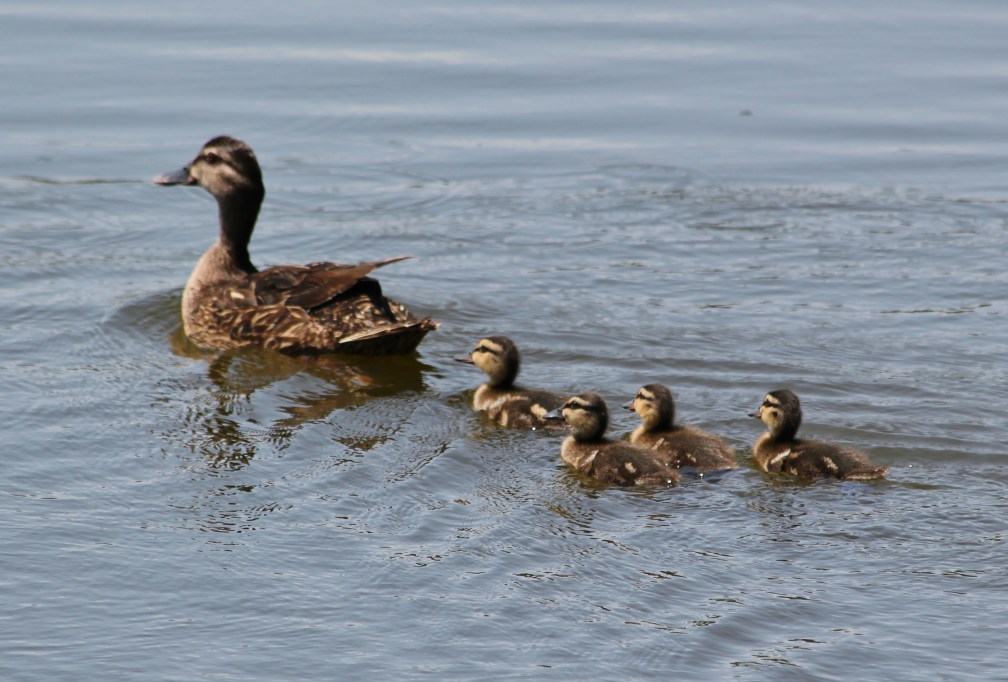
Ducks are about as common as squirrels. But they are so damned photogenic…

Woodpeckers have drilled scores of holes in an old pine near my home. Most of the time the holes are occupied by European starlings, but on this day I noticed a squirrel had moved in.
 Bill Frederick's portfolio